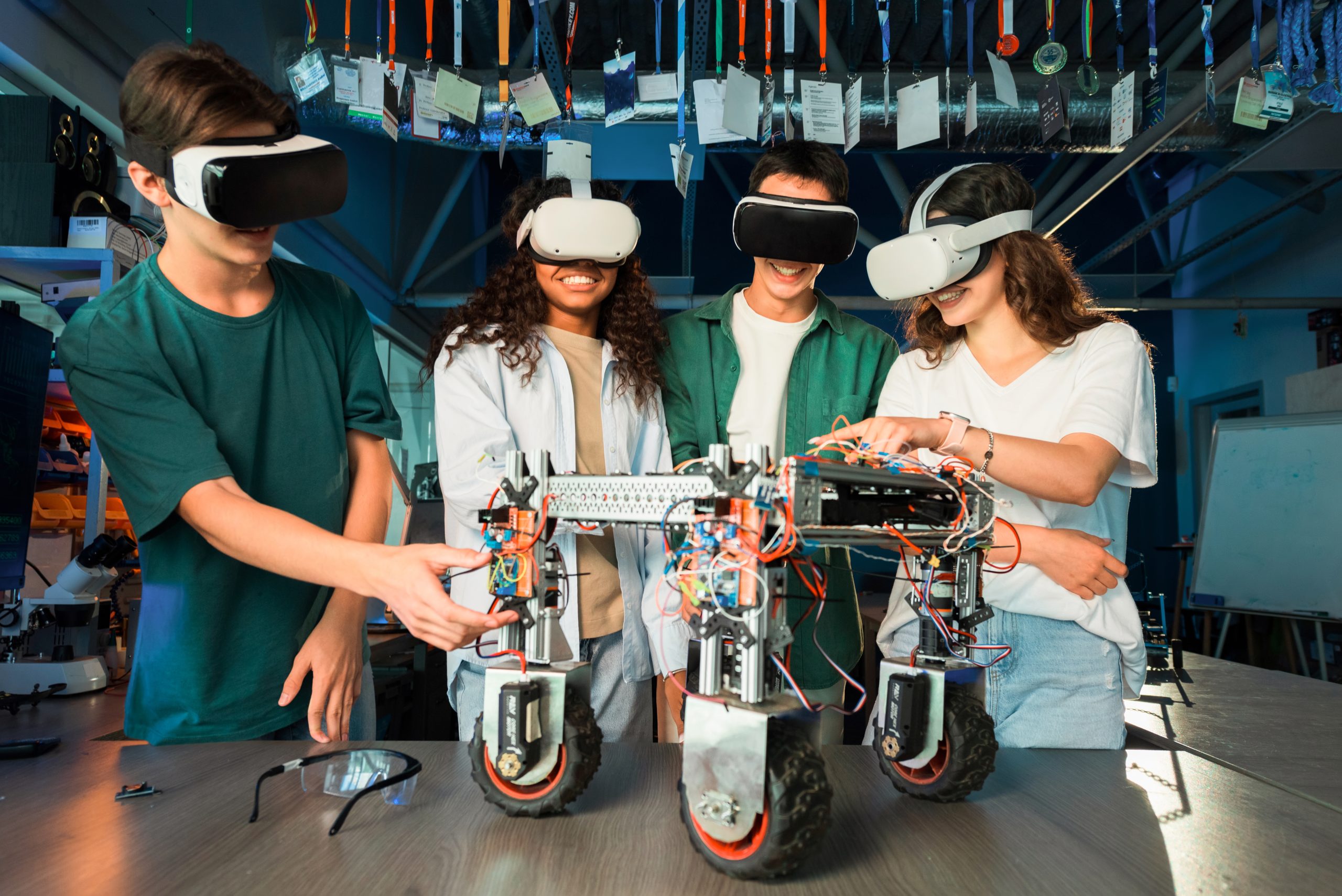

How Are Robots Changing the of Work?
The world of work is evolving faster than ever before, and at the heart of this transformation is robotics. From factory floors to hospital corridors, are no longer futuristic concepts—they’re becoming vital coworkers, revolutionizing how businesses operate and how humans perform their jobs. The rise of robotics is shaping a new era of efficiency, safety, and innovation, while also raising questions about the of employment and skills.
- Boosting Productivity and Efficiency
One of the most significant ways are changing is through productivity. can perform repetitive and precision-based tasks faster and more accurately than humans. In manufacturing, for instance, arms can assemble products with incredible speed and zero fatigue. This allows companies to maintain high production rates and consistent quality.
don’t need breaks, don’t make human errors, and can work 24/7. This leads to higher output and lower operational costs. Businesses can redirect human workers toward tasks that require problem-solving, creativity, and emotional intelligence—areas where humans still outperform machines.
- Enhancing Workplace Safety
are also playing a vital role in making workplaces safer. Dangerous jobs such as welding, mining, or handling hazardous materials are now increasingly done by robots. In logistics centers, automated guided vehicles (AGVs) transport heavy goods, reducing the risk of worker injuries. In construction, robotic drones inspect sites and monitor structural stability, ensuring that humans are not exposed to unsafe conditions.
This shift doesn’t just save lives—it also lowers insurance costs and creates more sustainable, long-term environments.
- Transforming Different Industries
Every major industry is experiencing the impact of robotics. In healthcare, surgical assist doctors in performing precise and minimally invasive operations. In agriculture, plant seeds, monitor crops, and even harvest produce using AI-based decision-making. Retailers are using for inventory management and customer service, while logistics companies rely on automated warehouses to speed up deliveries.
Even creative industries are exploring assistance—designing architecture, performing music, and producing art—all powered by advanced robotics and artificial intelligence.
- Creating New Job Opportunities
While there’s concern about automation replacing human jobs, is also creating entirely new career paths. As companies adopt robotic technologies, they need engineers, programmers, data analysts, and maintenance specialists to build, operate, and monitor these systems.
Moreover, the rise of is fostering new industries focused on design, ethical AI, and human-collaboration. Rather than simply eliminating jobs, are reshaping them—requiring humans to upskill and adapt to more technologically driven roles.
- Human- Collaboration (Cobots)
The isn’t about replacing humans—it’s about collaboration. Collaborative robots, or “cobots,” are designed to safely alongside humans, complementing their abilities rather than competing with them. For example, a cobot might handle heavy lifting or repetitive assembly , allowing human workers to focus on oversight and quality control.
This partnership is already transforming workplaces in sectors such as automotive manufacturing, electronics, and logistics. Cobots are intuitive, easy to program, and adaptable, making them valuable teammates in small and large businesses alike.
- Shaping the Skills of the Future
As becomes a central part of , the demand for new skills is increasing. Employees of the will need to understand technology, data analysis, and systems management. Soft skills like creativity, adaptability, and problem-solving will also be highly valued, as humans take on the roles that cannot.
Education systems are beginning to adapt by emphasizing STEM (Science, Technology, Engineering, and Mathematics) learning and digital literacy. Lifelong learning and continuous upskilling will become the new norm in this rapidly changing landscape.
- Ethical and Economic Considerations
The integration of also brings ethical and economic challenges. Questions about job displacement, privacy, and data security are at the forefront of discussions. Businesses and governments must ensure that the transition to robotic workplaces is fair, inclusive, and balanced. Investments in reskilling programs and responsible automation policies will be key to ensuring that technology enhances society rather than divides it.
- The Road Ahead
The of with robotics is exciting and full of promise. As machines take over repetitive and risky tasks, humans can focus on innovation, creativity, and meaningful problem-solving. Workplaces will become smarter, safer, and more efficient—but only if people and technology grow together.
The era of isn’t about losing jobs to machines; it’s about redefining what work means. With the right mindset and preparation, can help humanity unlock a future where technology amplifies human potential rather than replacing it.
In short:are not taking over the of —they are helping us build it.